What is Spain Known For? 36 Things Spain is Famous For!

“What is Spain known for?” Spain is famous for many things, not only football, paella and flamenco.
As a Spaniard, I find it funny to hear about all the things Spain is associated with, and living in the UK taught me how others can perceive Spain and all things related to Spain.
If you’re curious about famous Spanish things, you’ll find them here.
This post contains affiliate links, and as an Amazon Associate, I earn from qualifying purchases. If you click through and purchase something, I receive a small commission on the price at no extra cost to you. This helps me keep the content up to date and make other improvements to the blog.
1. Barcelona

La Sagrada Familia is, without a doubt, one of the things that Barcelona is known for. This Gaudi masterpiece needs to be on everyone’s bucket list.
However, it isn’t the only Gaudí building to visit in Barcelona. Park Güell, Casa Vicens and Casa Güell are other buildings where you can admire Gaudi’s architectural style.
Even if you aren’t a big fan of museums and art galleries, Barcelona has lovely parks, beaches and an incredible atmosphere.
2. Madrid

When you ask people about Spain, two cities come to mind: Madrid and Barcelona.
Madrid is Spain’s capital and one of the most visited destinations in the country.
The city is home to must-see museums, historical buildings like the Prado and Reina Sofia Museums, and the Royal Palace. It’s rich in history, literature and art.
Besides these important attractions, the city has lovely parks, like El Retiro. This park is the biggest and reminded me a bit of Central Park in New York.
You can spend over three hours checking out the monuments and hidden gardens.
3. The Canary Islands

The Canary Islands are one of the preferred holiday destinations in Europe, and it isn’t surprising – the fantastic weather all year round, its wide range of activities, including many family-friendly ones, and its stunning beaches make it a wonderful place.
Tenerife is the biggest and most famous island in the Canary Islands. El Teide volcano is a major attraction, but there are many things to do in Tenerife. I loved visiting Tenerife, and it surprised me with its nature.
However, Tenerife isn’t the only beautiful place in this part of Spain. Las Palmas and Fuerteventura are also worth it.
4. Ibiza
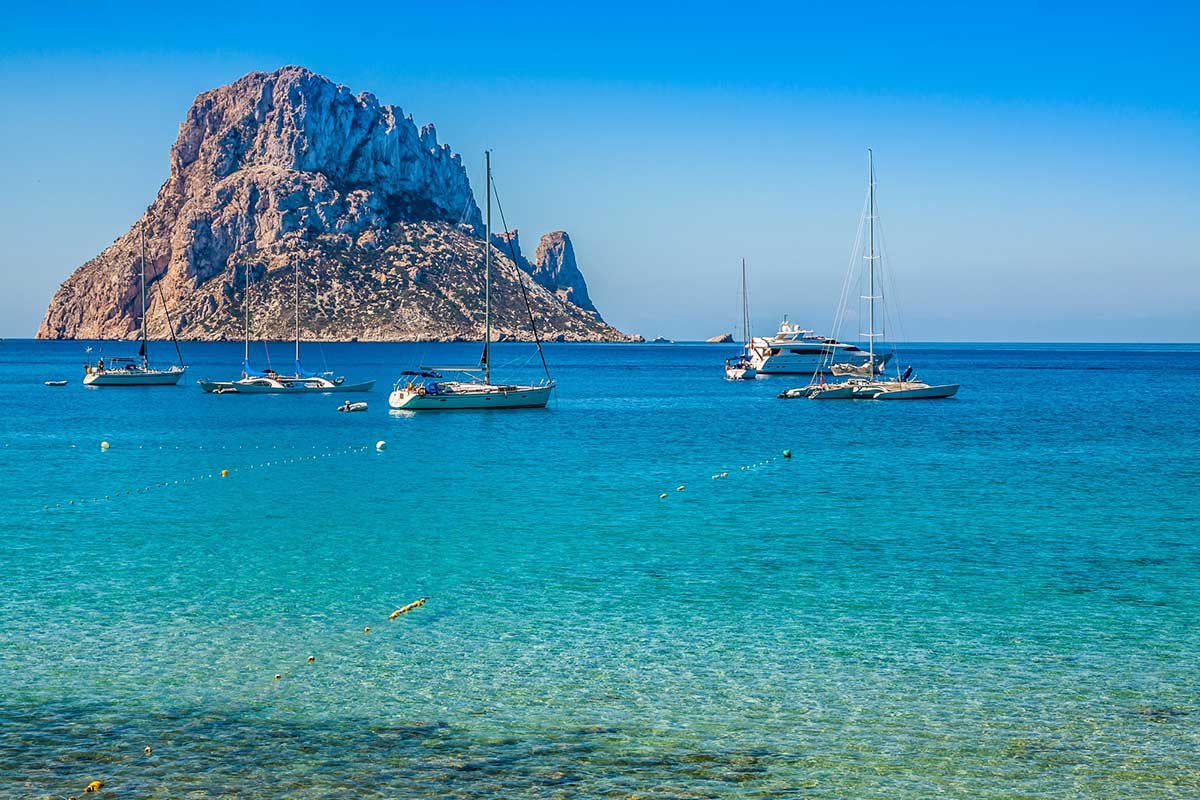
Ibiza is internationally known for its nightlife and parties. If you’re all about having a good time with friends, dancing, singing and sipping cocktails, Ibiza is ideal for you.
Pachá Ibiza and O Beach Ibiza are only a few of the many amazing nightclubs on this Spanish Island. They host out-of-this-world parties and festivals where famous international DJs and singers come to Ibiza.
But is Ibiza all about parties? No, there’s much more than parties in Ibiza. Ibiza’s Old Town, called Dalt Vila, is worth exploring. It’s home to beautiful streets with independent shops, monuments and historic buildings.
Also, the beaches in Ibiza are stunning – small coves, golden sand and crystal clear waters. There’s nothing better than spending the day at the beach and watching the sunset.
If you don’t like the nightlife scene, visit Ibiza off-season, and you’ll have a different experience.
5. Benidorm
If you’re from the UK, you’ve probably heard of Benidorm because of the TV show filmed there.
Benidorm is a popular destination for travellers seeking a budget-friendly and fun holiday. The nightlife in Benidorm is one of the reasons many people visit. Despite the low prices, Benidorm is often seen as tacky.
Benidorm might not be a destination for everyone, but its surrounding towns offer a different experience. I really enjoyed visiting Altea.
6. Costa del Sol

Malaga and its surrounding towns, which are often referred to as Costa del Sol, are some of the most popular summer holiday destinations.
There are many reasons to visit Malaga: the warm weather, lively atmosphere and beautiful beaches, among other things.
Malaga is my hometown, and I assure you that its tourism has evolved a lot in the last few years. Although many travellers come for the beaches, the museums and culture are also becoming popular.
7. Rich History
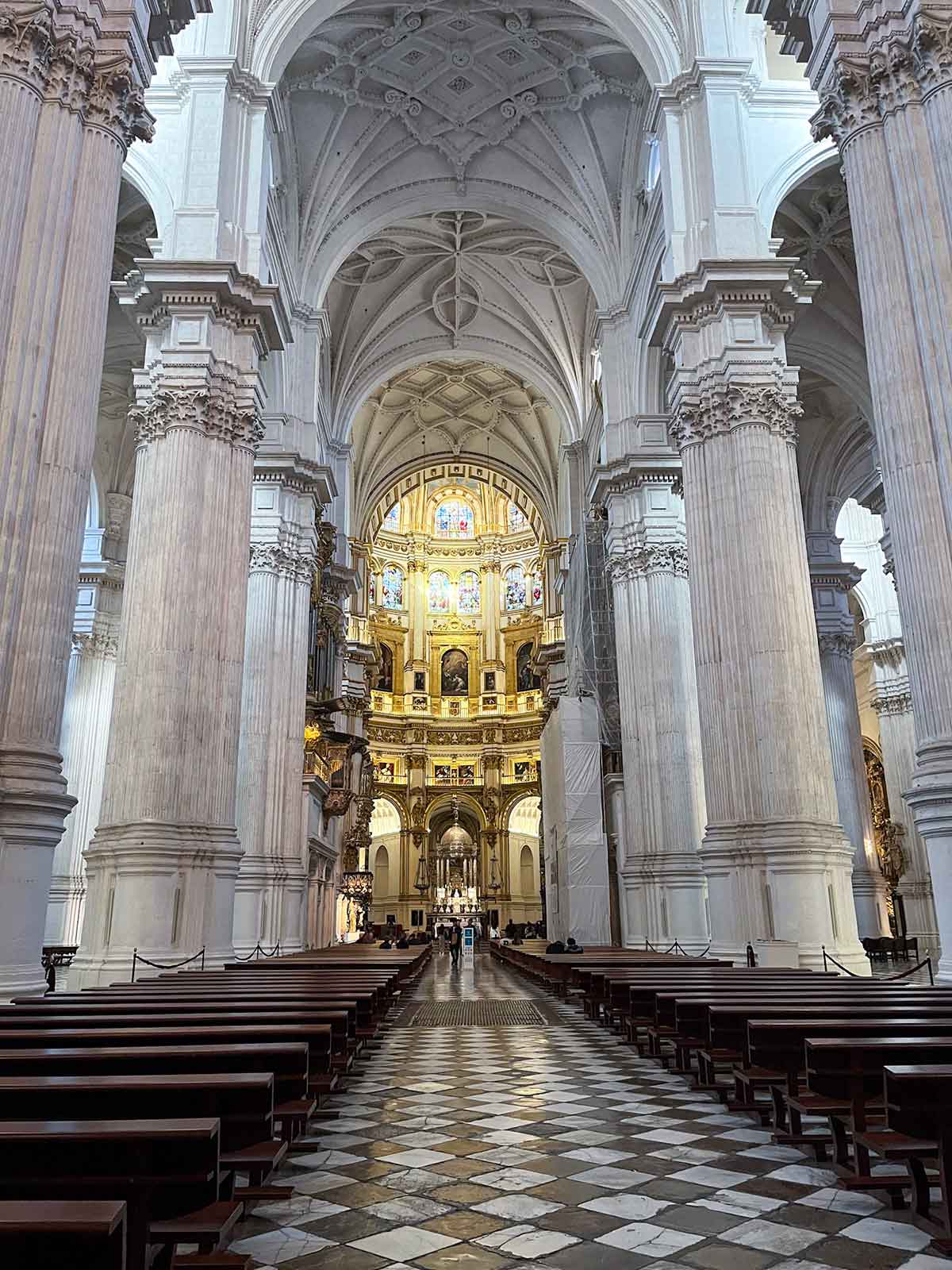
What is Spain known for in history?
Spanish history is rich and complex; it’s difficult to summarise the numerous events and cultures that influenced the country and made it what it is now.
The invasion of the Moors, the Reconquista, the Spanish Inquisition, the Spanish Civil War and Franco’s authoritarian regime are some of the things Spain is renowned for in history.
8. Sagrada Familia

There’s no doubt that Sagrada Familia is one of the most impressive buildings in Spain.
Learning about this building’s history and visiting its interior will amaze you. Antoni Gaudi started this unfinished masterpiece, and other important Spanish architects carried out his plans.
The roof, the stained glass windows, the door arches, and just everything else are built to perfection and have meaning behind them.
For example, some columns resemble tree branches, parts of the roof have sunflower shapes, and many things are linked to Gaudi’s love for nature.
Sagrada Familia is definitely one of those places you must visit once in your lifetime.
9. The Alhambra
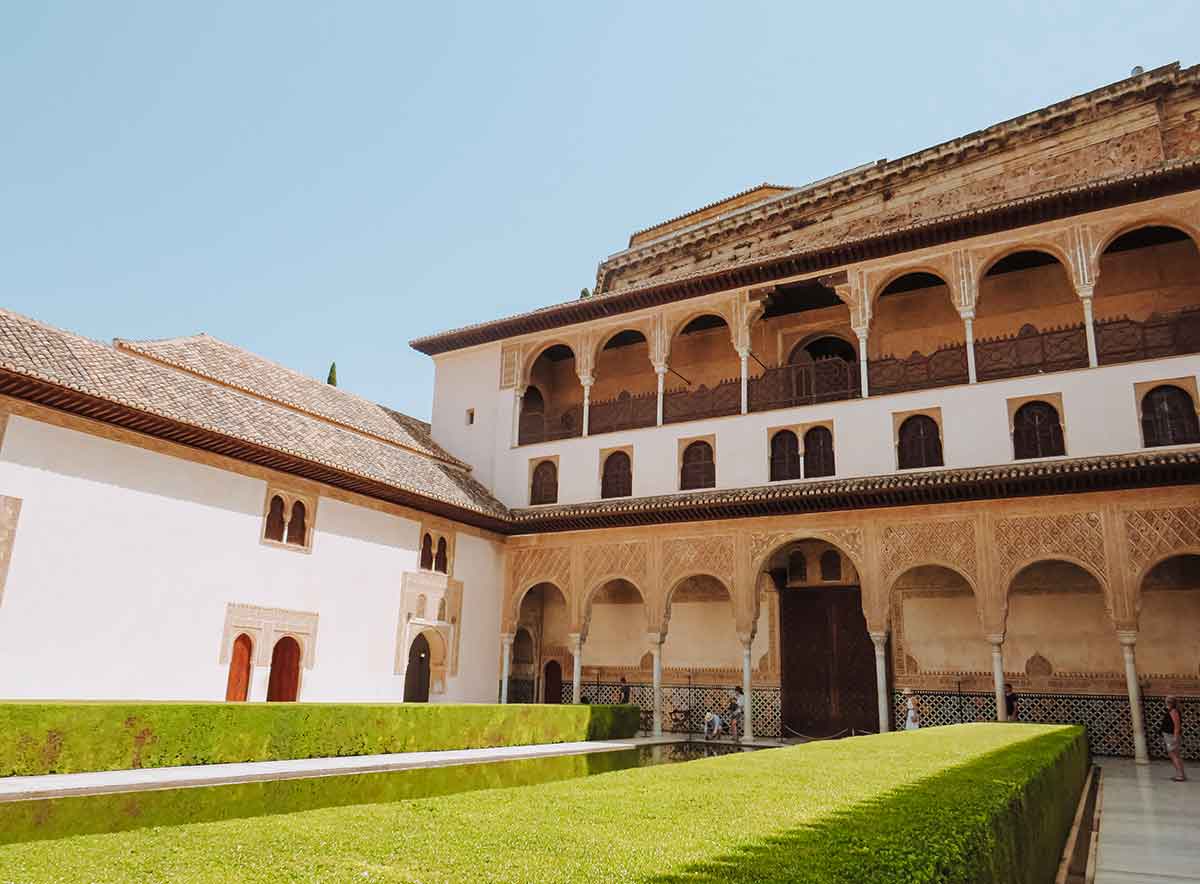
The most famous thing about Granada is the Alhambra Palace. Millions of international travellers go to see this rich in history building.
The Alhambra complex is home to historical palaces, fortresses and gardens. There are many things unique about this UNESCO World Heritage Site, but one must be its distinctive architecture.
The Moors spent an extended period in Granada and Andalusia, as evidenced by the region’s detailed Nasrid architecture.
I’ve been to the Alhambra more than three times and am always amazed by its architecture and beauty.
Whether you wander Palacio de los Leones, where you can see the beautiful marble fountain with lion statues, Generalife or the gardens, you feel immersed in the history and culture of this building.
10. Sierra Nevada
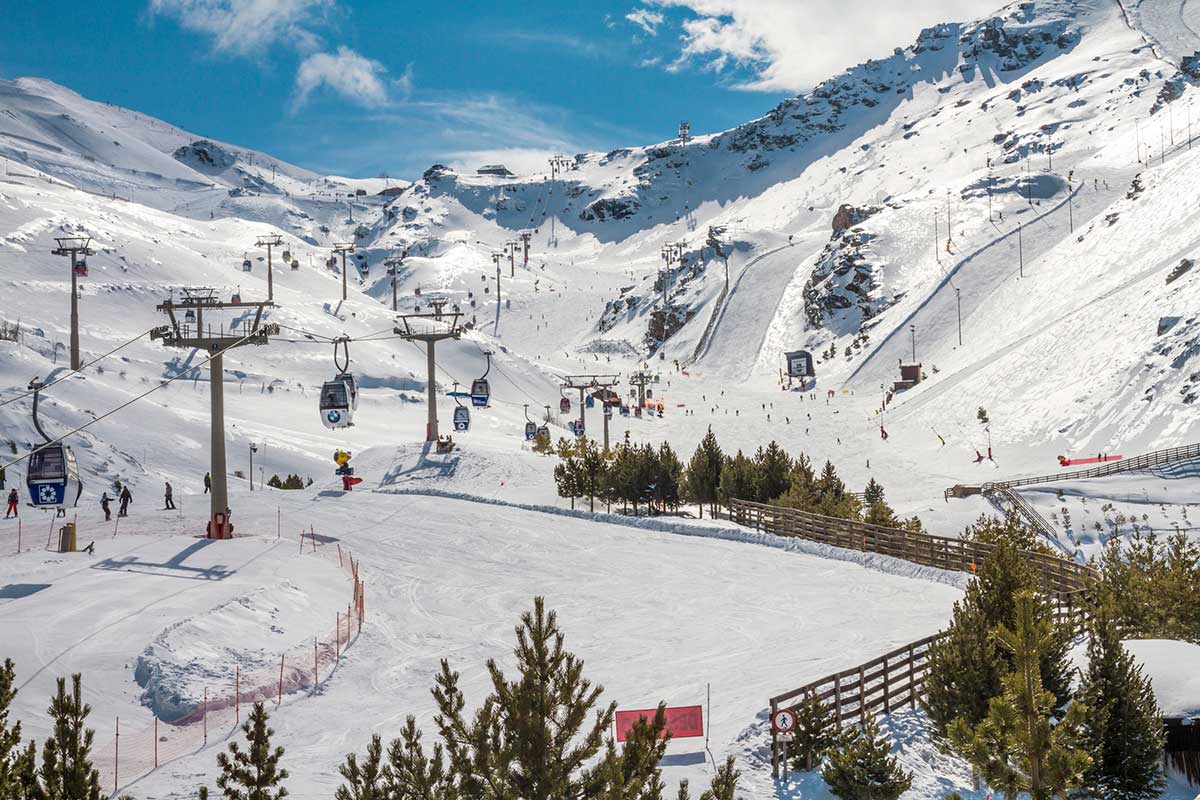
Sierra Nevada, located in Granada, is Spain’s best ski resort. If you’re looking for a ski holiday in Spain, that is the place to go. You can do anything from skiing and snowshoeing to other winter activities.
Apart from these activities, you can see the highest peak in the Spanish Peninsula or opt for a relaxing weekend away by staying in a hotel with a spa. El Lodge is the perfect stay with cosy cabins and a heated outdoor pool with scenic mountain views.
While in Granada, you can also visit the beautiful region of La Alpujarra, a series of whitewashed towns and villages bordering Sierra Nevada. Pampaneira and Soportujar are some of the towns worth adding to your itinerary.
11. Camino de Santiago

Camino de Santiago, or Way of St. James, is a network of hiking trails that take you to the shrine of the apostle James in the cathedral of Santiago de Compostela in Galicia in Northern Spain.
If you love hiking, you definitely must check out Camino de Santiago. None of its hiking trails are easy, but if you’re used to going on long walks or simply want a challenge, why not do one of Europe’s most popular hiking trails?
The green landscapes in Northern Spain are pretty impressive, and you’ll also discover little towns and other hidden gems during your walk.
12. Literature

Spanish literature is well-known in other countries. Miguel de Cervantes, who wrote Don Quixote, is the most famous Spanish writer. However, if you studied Spanish literature, you know that many other writers greatly impacted the literature world.
Federico García Lorca, Lope de Vega and Pedro Calderón de la Barca are other famous writers in Spanish literature.
One of the best places to learn about Spanish literature is Madrid. The capital was home to many of these artists.
13. Weather
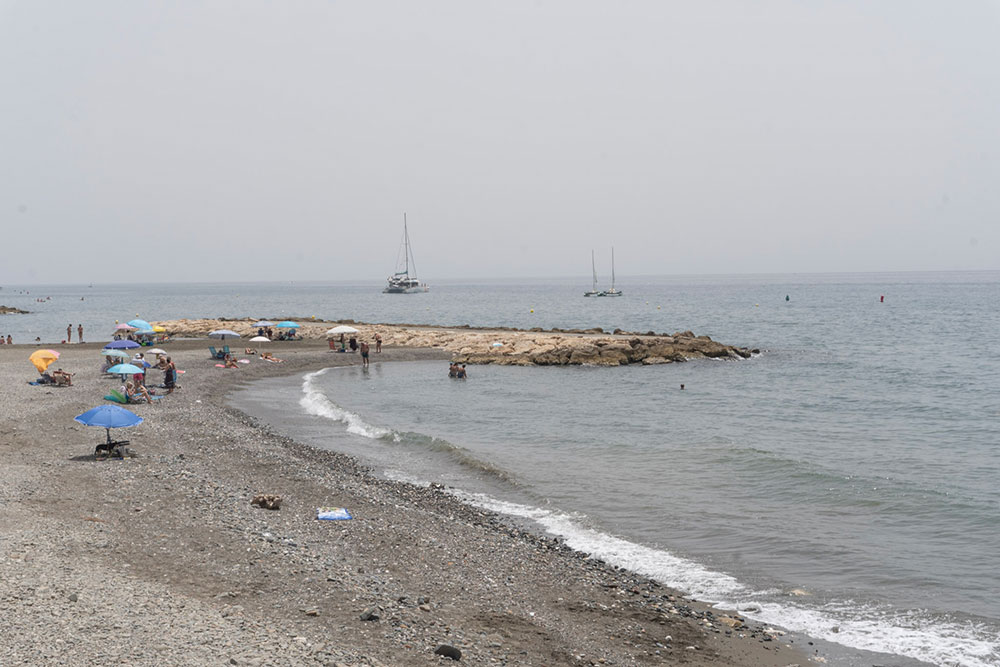
One of the biggest misconceptions about Spain is that it’s sunny and warm everywhere. However, Spain has a wide range of climates, so the weather in the south differs from that in the north and on the islands.
You can experience all sorts of weather in Spain, from sunny and warm almost all year round, like in the Canary Islands, to rainy and chilly winters, like in the Basque Country or Cantabria.
If you visit Spain in summer, you’ll find it very warm in most places, and temperatures can reach 40 degrees Celsius. In contrast, winters are different, and some areas are milder than others.
Packing for Spain in winter is challenging, and many travellers don’t know it can get chilly in the warmest places. For example, the temperature in Malaga can be 19 or 20 degrees during the day and 9 degrees during the evening. The difference between day and night is significant.
14. Bullfighting

Is bullfighting still a thing in Spain? Yes, you can still attend corrida de toros (bullfighting events) in several parts of Spain, such as San Fermin, Seville and San Sebastian.
Bullfighting was very popular nationwide, but many people started questioning this practice in the early 20th century. Since then, many Spaniards, including myself, have been against bullfighting.
Unfortunately, bullfighting continues to be practised and associated with Spanish culture.
15. Flamenco

Flamenco is one of the most traditional forms of music and dance in Spain. It originated in Seville, in Southern Spain. The best flamenco shows take place in Andalusia; however, you can attend live flamenco events in other cities like Madrid.
A common misconception is that every Spaniard loves flamenco and knows how to dance it. The truth is that not everyone is a fan of this traditional music and dance.
Andalusians are more likely to know how to dance it, but I must admit that, despite being from Andalusia, I don’t know how to dance flamenco, and I am not the only one.
16. Gaudi

If you’ve ever visited Barcelona, you probably know about Gaudí.
Antoni Gaudi was an important Spanish architect and designer. He was the artist behind many of Barcelona’s impressive buildings.
His best-known work is La Sagrada Familia, but he also built other historical buildings, such as Casa Batlló and Casa Vicens (see image above).
Gaudi’s architectural style is unique and like no other.
17. Pablo Picasso

Picasso is one of the most famous Spanish painters. Although he was born and raised in Malaga, he spent most of his adulthood living in France.
He was a very important figure in art and co-founded the Cubist movement.
La Guernica is one of his most well-known paintings, but he also created many other impressive masterpieces.
You can now find many of his paintings and sculptures in museums like Museo Picasso Malaga.
18. Semana Santa
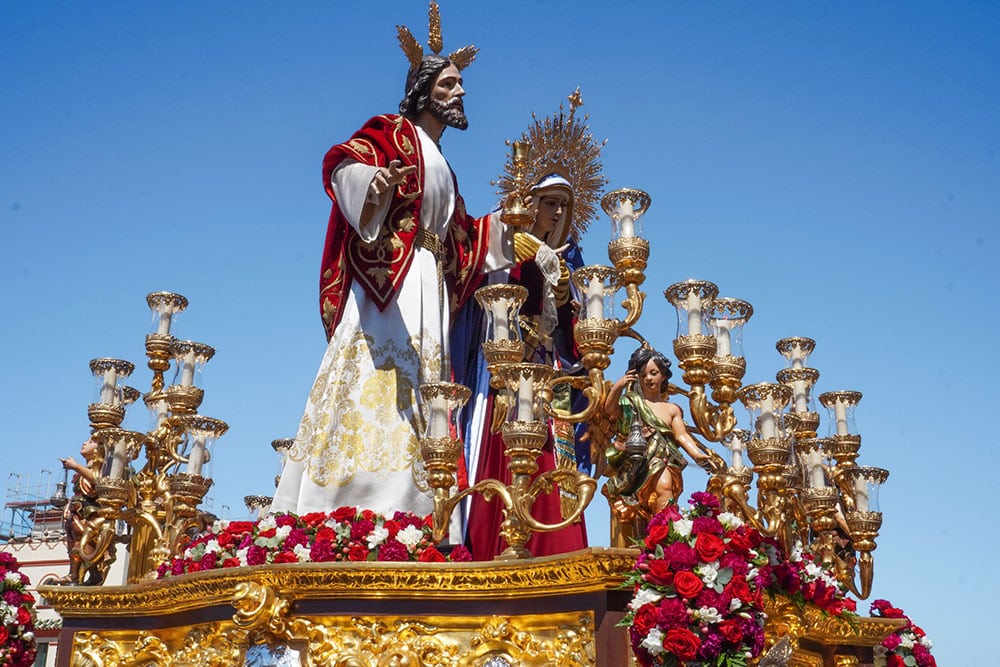
Easter celebrations take place in many European destinations, but Easter is one of the most significant events in Spain. Easter lasts longer than a few days in other countries like the UK.
Semana Santa (Holy Week) lasts from Palm Sunday to Easter Sunday. During these days, you can see the procesiones, Spanish religious parades.
They’re unique in many ways. These heavy floats with Jesus, Mary and other religious figures are worth seeing. Each procession depicts a scene from the Bible, such as Jesus’ resurrection, the Last Supper, and others.
The floats are carried by men who belong to a brotherhood, and they take the float across the city for many hours. The atmosphere is incredible, and you can listen to the music of live bands.
19. Ferias

Spaniards love to party, and there’s some truth behind it. When the good weather arrives, locals love ferias.
They are usually in late spring and summer, and you can expect concerts, traditional dances, food and drinks, and attractions.
You can find big ferias like the ones in Seville or Malaga, which last 7 days, or small ones in villages, which last a few days.
Whenever you travel to Spain, I highly recommend checking the town’s event calendar on the official website.
However, if attending a feria is on your list, I wouldn’t miss the one in Seville, which takes place in April.
20. La Tomatina
Have you ever heard of the tomato festival? It’s one of a kind because it consists of throwing tons of tomatoes at other people. It’s crazy, fun and unique!
It takes place in Buñol, a town in the Valencian Community, on the last Wednesday of August every year.
This event originated from a small food fight between children in 1945 and has become a thing since then.
21. Football

Barça and Real Madrid are two of the biggest football teams in Spain. Who hasn’t heard about them? They have a good reputation for a reason.
If you’re a football fan, you’ll love Spain and Spanish football, and attending a football match should definitely be on your Spain bucket list.
In case you aren’t in Madrid or any other city when a match takes place, visiting a stadium and museum is also a fantastic experience.
I’m not a football fan, but my partner is, so I’ve been to a few Spanish stadiums, and I must say that Bilbao stadium (see photo above) was one of my favourites.
22. Late-night culture

Having lived in the UK, I can say that we Spaniards tend to do things late. If you ask a friend to go out for dinner in the UK, you’ll usually meet at 6 pm, but if you do the same in Spain, you’ll meet at 9 pm or later, or much later in the summer.
I remember when my partner couldn’t get his head around the idea of my family saying to go out for dinner at 11 pm. But it’s completely normal.
You’ll see Spaniards having a meal or ice cream in the late evening. Families stay out with kids late, and you won’t experience the same in other northern European countries.
Late dinners and walks tend to be more of a summer thing, but you can also experience this at other times of the year.
23. Siesta
Siesta is the Spanish term for nap. If you’ve never heard of it, Spanish people usually take short naps in the late afternoon, anytime between 3 pm and 4 pm, when most local businesses close.
They’re even more popular during the summer months because it’s really warm outside. People love taking a nap after lunch until 5 pm, when they might head to the beach or the pool or return to work.
Does this mean every Spaniard take a nap in the afternoon? No. It really depends on the person, their work shifts and the season.
I’ve always heard more family members and friends napping in summer because of the heat, whereas many people don’t really want to sleep in winter because it gets darker earlier.
24. Paella

Paella is the first associated dish with Spain. It’s believed to be Spain’s national dish; however, paella comes from the Valencian Community.
It’s true that you can enjoy paella across the country, but you’ll taste the best one in Valencia and its surroundings.
Chicken paella and seafood paella are the top choices, but traditional paella is made with chicken, rabbit, vegetables, rice and saffron.
Paella is eaten at lunch, and never at dinner, despite some bars serving paella in the evening, and if they do, they often target tourists.
25. Tapas

Food culture is big in Spain, and if you love Spanish cuisine, you’ve probably heard of tapas.
Tapas consists of small dishes that are meant to be shared with others, and it’s a fantastic way to try different Spanish dishes.
Ensaladilla rusa (Russian Salad), tortilla (Spanish omelette), and croquetas are a few of the many dishes you can have as a tapa.
In some areas of Spain, you can also find tapa bars where you order a drink, either a beer, a glass of wine or a soft drink and come along with a tapa.
26. Pintxos
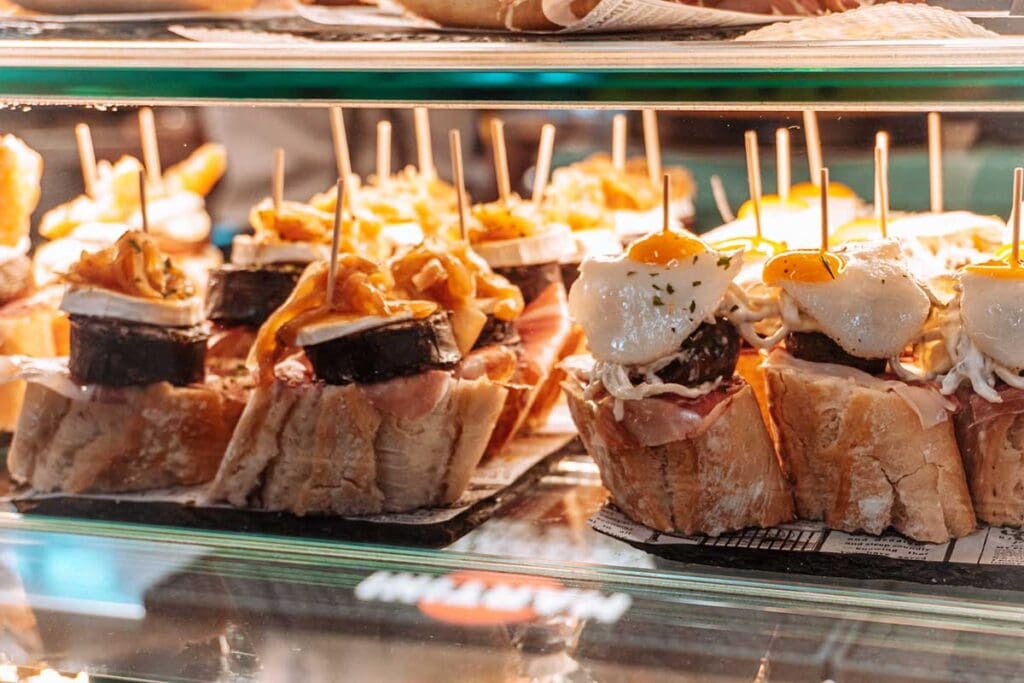
Pintxos are similar to tapas, so if you are wondering what the difference is, pintxos are usually small skewers or pieces of bread topped with meat, vegetables, or fish.
They are typical of the Basque Country and some areas of Northern Spain, so you’re less likely to find them in other parts.
27. Jamón Ibérico
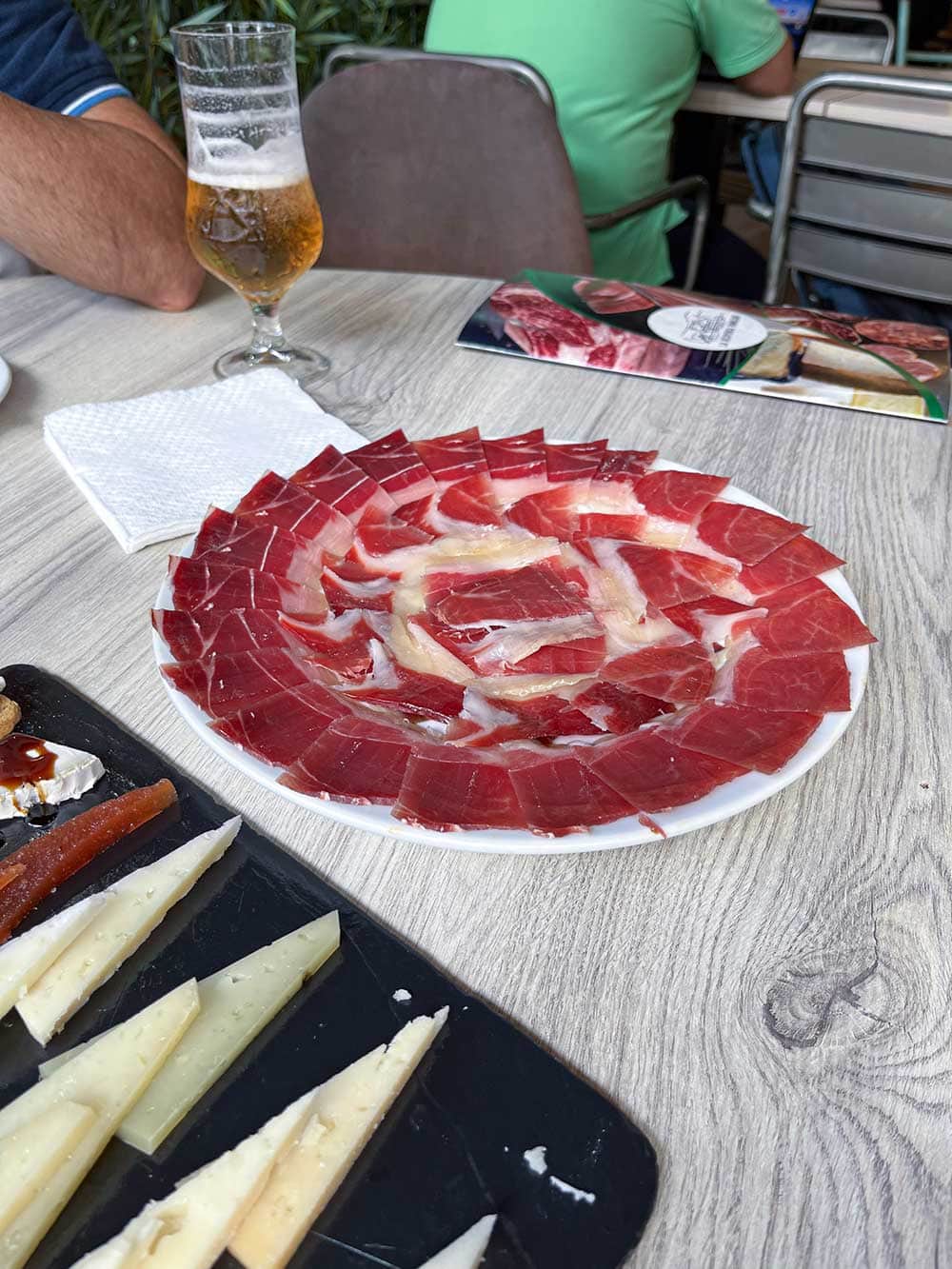
Iberian ham is one of Spain’s most famous products. You can have it as a tapa alongside breadsticks, in a sandwich or add it to dishes like huevos rotos.
Its unique flavour makes it different from other types of ham, including the Italian Parma ham or Serrano ham.
28. Churros con chocolate
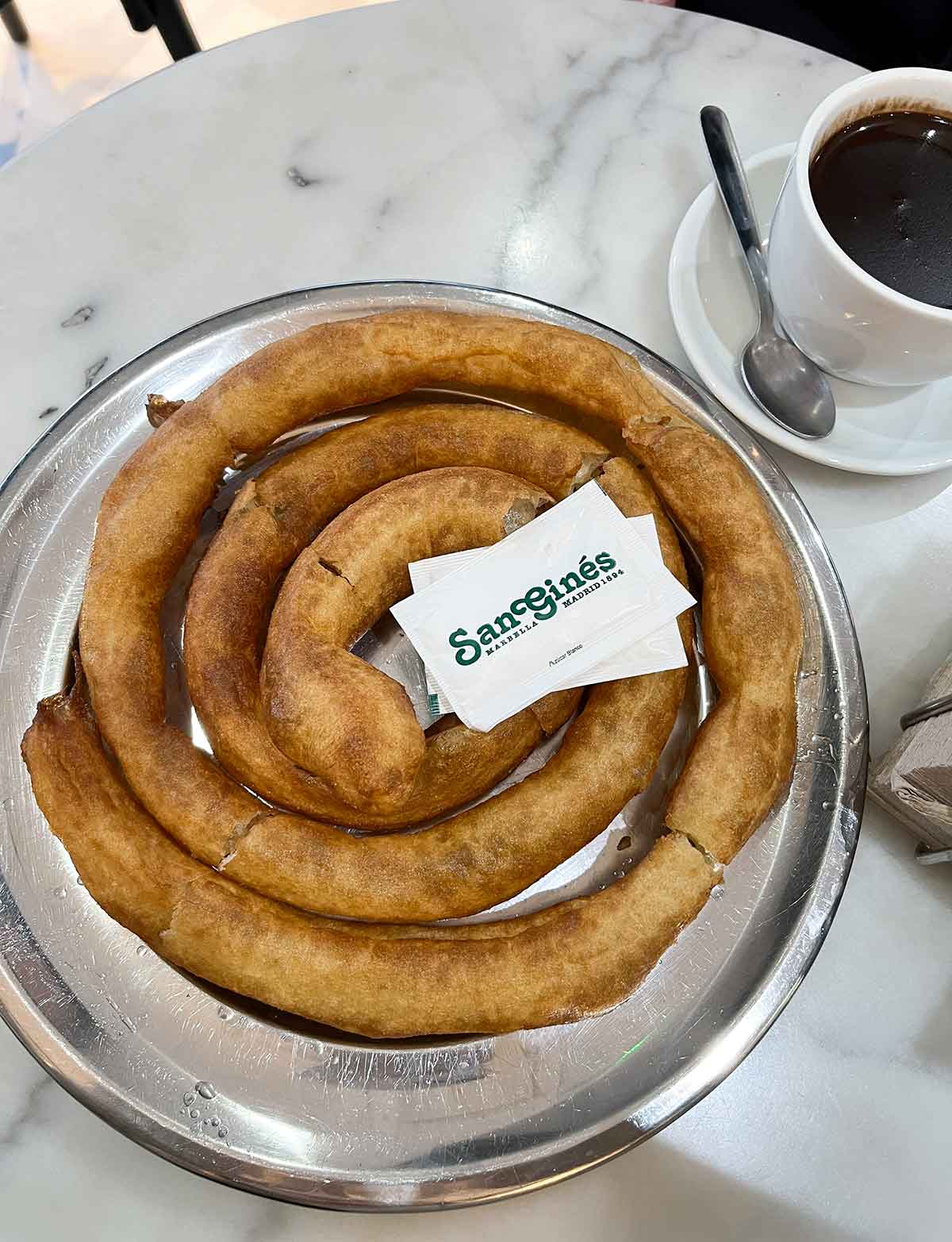
The most classic Spanish breakfast is churros con chocolate. These fried doughs, in an oval shape, are incredibly delicious.
You can have them on their own, but the best way to have them is with a cup of hot chocolate, but not just any chocolate. The Spanish hot chocolate accompanying churros is thicker than usual, perfect for dipping.
Not every breakfast place serves churros, so look for churrerias (breakfast bars that specialise in serving churros) when you fancy eating them.
In some places, you’ll also find dips like dulce de leche (caramel) or chocolate blanco (white chocolate).
29. Olive Oil

Spain is one of the biggest producers of olive oil, so you’ll only find high-quality olive oil, and Spaniards love it.
Unlike the Northern European countries that use butter to cook, the Spanish, Italians and other Mediterranean countries mostly use olive and sunflower oil occasionally.
Whether you need to season a salad, fry homemade chips or a steak, you’d use olive oil in Spain.
Because of the importance of this product, many souvenir shops sell extra virgin olive oil bottles.
30. Wine

Did you know Spain is one of the biggest wine producers in Europe? After beer, wine is one of the most popular alcoholic drinks in the country.
La Rioja region is such an important place for wine, but it isn’t the only region that produces wine. Catalonia, Extremadura and Andalusia also have very reputable wineries.
Whether you love red, white or sweet wines, there’s a wine you can try in Spain.
31. Sangria
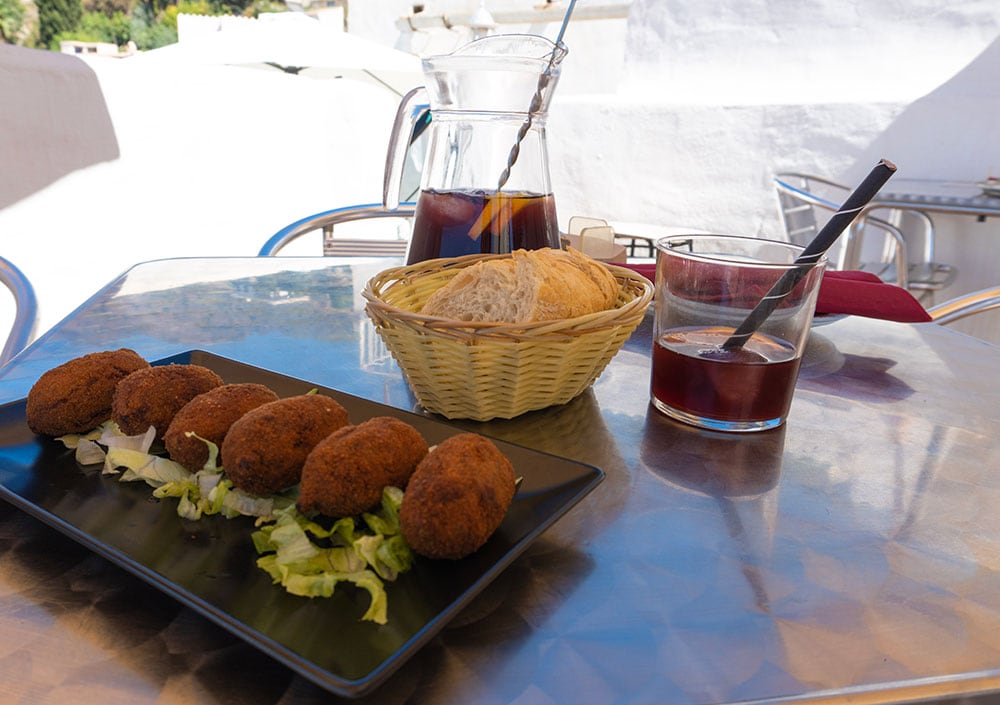
This Spanish alcoholic drink is flavourful and an excellent choice for anyone who loves wine. It’s made with red wine, Sprite or a similar lemon-flavoured soft drink, cinnamon, sugar and several fruits like apples, oranges and peaches.
Many travellers think sangria is Spain’s most popular boozy drink; however, it isn’t. Beer and tinto de verano, a drink made with red wine and Sprite, are among the top choices.
Most locals will enjoy sangria with a meal rather than a late-night cocktail at a club.
32. Moorish architecture

Moorish architecture is something Spain is famous for. The invasion of the Moors into the Peninsula made an impact on Spain’s culture and architecture.
One of the most preferred destinations was Southern Spain, which can be seen in the Moorish architecture you can find in important buildings like the Alhambra Palace, Alcazaba de Malaga and Alcazar de Sevilla.
This architectural style is unique and so detailed that it makes you look at the most minor elements.
33. Multiple languages
Spanish, officially called Castilian, isn’t the only language in Spain. Everyone speaks Spanish, but some regions speak other languages.
Catalonia speaks Catalan, the Basque Country speaks Basque, and Galicia speaks Galician. All these languages are also official, so many Spaniards are bilingual.
Even if some regions don’t have an official language, you’ll find different accents for Castilian. For example, the Andalusian accent isn’t the same as the one in Castile and Leon.
There are even differences within cities in the same region.
34. Superstitions

Are Spaniards superstitious? Yes, many of them believe in superstitions.
You can hear all sorts of superstitions, and these are popular ones:
- You’ll get bad luck if you see a black cat during the day
- You must wear red underwear on New Year’s Eve to be lucky.
- Flowers and plants will die if you touch them during your period.
- You’ll get bad luck if you open an umbrella in an indoor space.
- You’ll get bad luck if you throw salt.
35. Fashion
When discussing fashion, Italy is one of the main countries that come up, but Spanish fashion is also worth mentioning.
Fashion isn’t something new in Spain, and it’s also part of the culture. Flamenco dresses and mantillas are examples of traditional fashion in Spain.
However, Spain has also made a significant impact on modern fashion. You can find Spanish brands that are well-known internationally.
You’ll have heard of Zara. This global fashion retailer, part of the Inditex group, originated in Spain. Likewise, Balenciaga and Loewe are other well-known Spanish brands.
36. AVE high-speed train
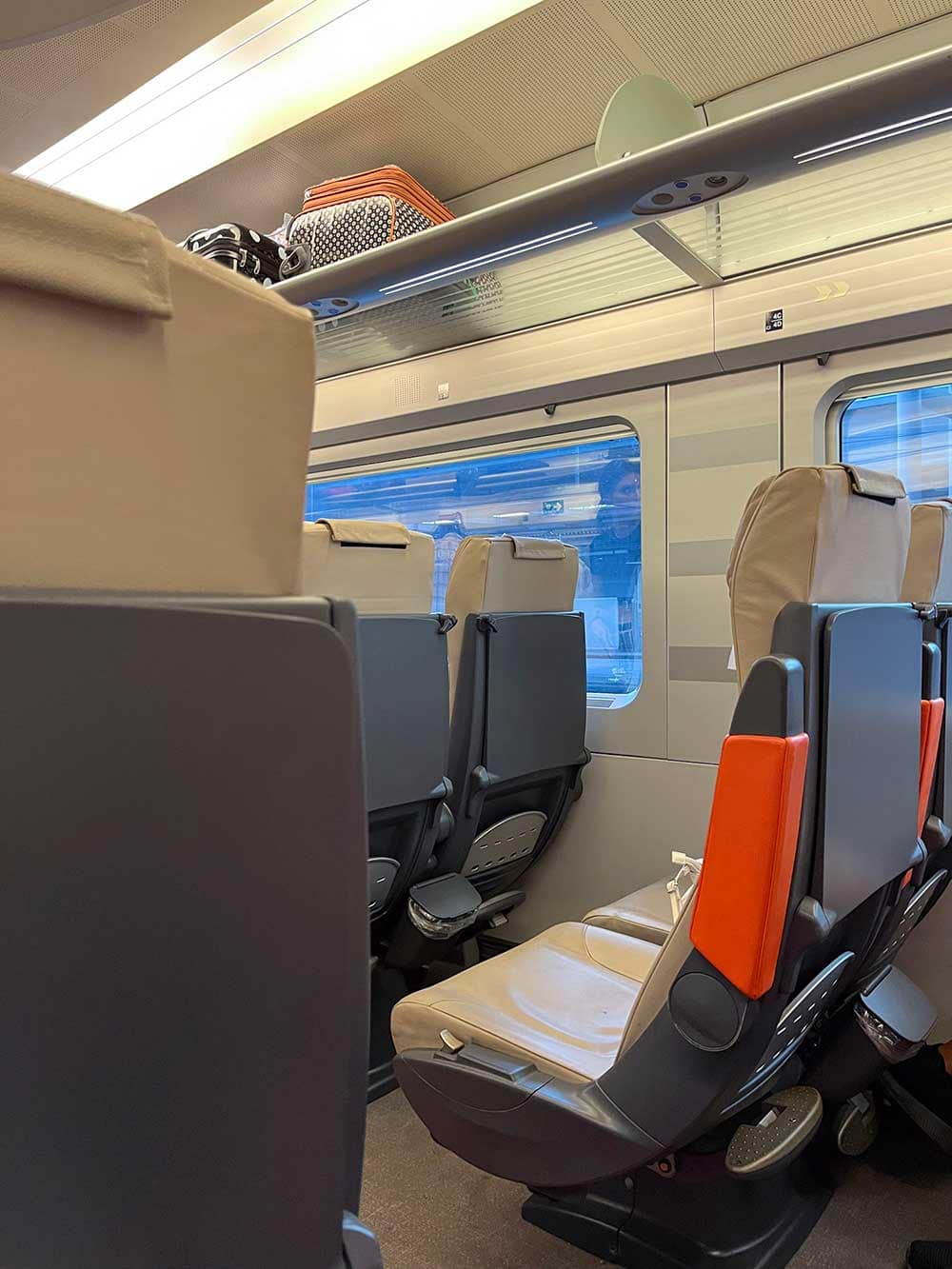
Public transport in Spain is known for being efficient and fast, and taking the AVE high-speed train is a fantastic way to travel around Spain.
Flying between cities might seem quicker than the train, but if you consider the waiting time at the airport, the passport control, etc., it’s usually faster to travel by train.
Having used AVE high-speed trains many times, I can say the seats are comfortable, you have enough legroom, and they have everything you need onboard: food, toilets, plugs and free WiFi.
The Cercanías, those who travel within a province, are also good. At least, I can confirm that with the one in Malaga.
Conclusion on what Spain is known for
So, what is Spain famous for? Spain has many famous things, from food and traditional events to architecture, history and sports.
Paella, flamenco and football might be the top things Spain is famous for, but they aren’t the only things, and you’ll be surprised by Spanish culture.
I hope you learned something new about Spain by reading this article.
Cristina x
Save these popular things in Spain on Pinterest for later

Don’t Forget…
Book your flight to your location through
Book your Accommodation through
Drive yourself around with ease using a local
Keep yourself safe and protected with
Book your tours and travel experiences with
Read more about Spain
- Bucket List Experiences in Spain
- Best City Breaks in Spain
- Hidden Gems in Spain
- Beautiful Landscapes in Spain
- Incredible Reasons To Visit Andalucia
- Top Tips for Travelling in Spain for the First Time
- Tipping in Spain: Etiquette and Culture from a Local
- What is the legal drinking age in Spain?
- Can You Drink Tap Water in Spain?
- Does It Snow in Spain?
